Product Description
Product Details
Application
Chemical Handling, Drinking Water, Utilities Water
Length
0.5mtr,1mtr,2mtr,2.75mtr,3mtr,4mtr
Feature
Excellent Strength, Good Material Use, Longer Life Span, Sturdy In Construction
Type
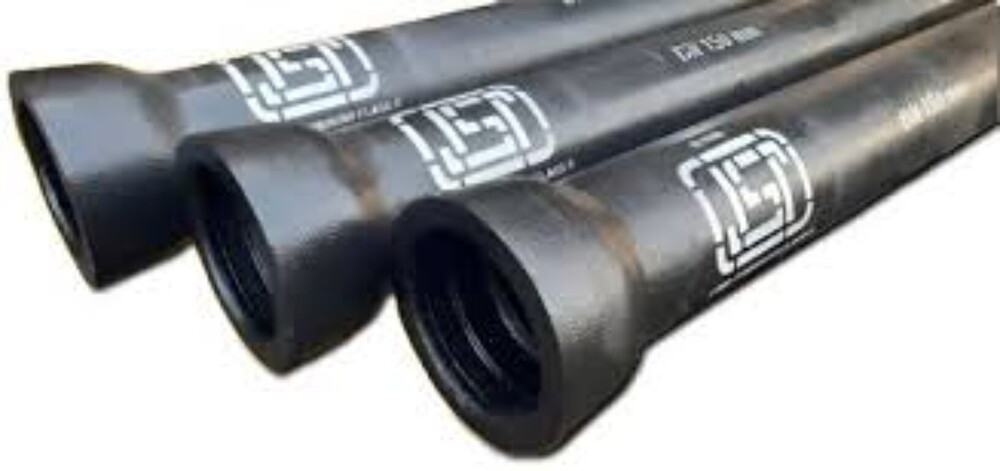
Cast Iron Spun Pipes,Socket & Spigot Pipe
Diameter
80 MM To 200 MM
Country of Origin
India
Grade
IS 1536 : 2000
Certification
ISO 9001:2015
Condition
New
Finishing
Polished
High Performance and ReliabilityEngineered through centrifugal casting, cast iron socket & spigot pipes ensure uniform wall thickness and consistent strength. Cement mortar internal lining and anti-corrosive bituminous or epoxy coatings provide lasting protection and enhance the pipe's service life, making them a dependable choice for critical fluid conveyance.
Versatile Application and Simple InstallationThese pipes support a broad range of uses in water supply, sewerage, and drainage, suitable for pressures as per LA, A, or B classifications. Compatibility with both push-on and mechanical joints allows for flexible installation, whether above or below ground. Leak-proof joints and end protectors ensure secure, long-lasting connections.
FAQ's of Cast Iron Socket & Spigot Pipe:
Q: How are the joints of cast iron socket & spigot pipes sealed?
A: Joints can be sealed using either push-fit rubber gaskets or lead caulking. Push-fit joints employ a rubber gasket for quick, secure, and leak-proof assembly, while lead caulked joints provide additional sealing, especially in high-pressure systems.
Q: What benefits does the cement mortar lining inside the pipe offer?
A: The cement mortar lining prevents corrosion, inhibits scale formation, and maintains water quality by providing a smooth internal surface, which also reduces friction losses over the pipe's service life.
Q: Where can cast iron socket & spigot pipes be installed?
A: These pipes are designed for versatile installation, functioning effectively both underground and above ground in applications ranging from municipal water supply to drainage and sewerage systems.
Q: What is the standard process for manufacturing these pipes?
A: They are produced using centrifugal casting, a technique that ensures a dense, homogeneous structure with consistent wall thickness, which contributes to higher strength and durability.
Q: When should I choose Class LA, A, or B pressure ratings?
A: The pressure class selection depends on system requirements: LA is suited for low-pressure applications, A for medium, and B for higher-pressure needs. It's recommended to specify the class based on expected operating pressures.
Q: What surface treatments protect the pipes from corrosion?
A: Surfaces are coated externally with bituminous or epoxy paints and internally lined with cement mortar, providing high resistance to chemical and environmental corrosion, along with a smooth, durable finish.
Q: What usage advantages do leak-proof, push-on or mechanical joints provide?
A: Leak-proof joints ensure water-tight connections, simplify installation, reduce risk of contamination or leakage, and require minimal maintenance, boosting reliability and system efficiency.





 Send Inquiry
 Send Inquiry
 Send SMS
 Call Me Free